

Inside Gator Millwork’s Custom Veneer Millwork Process
Custom veneer millwork carries architectural weight. It shapes how a room is perceived, and influences proportion, rhythm and light. When properly executed, veneer helps define how a space feels and functions.
At Gator Millworks, we treat custom veneer as a disciplined architectural system. We stay involved from the first design conversation through fabrication and installation, maintaining continuity across the full scope of the project. That integration protects the design and supports the level of refinement expected in high-end residential and commercial environments.
We’ve built our veneer process for projects that require accuracy and a clear standard of execution. It is structured, collaborative and controlled from start to finish.
Veneer Is a Material That Requires Planning
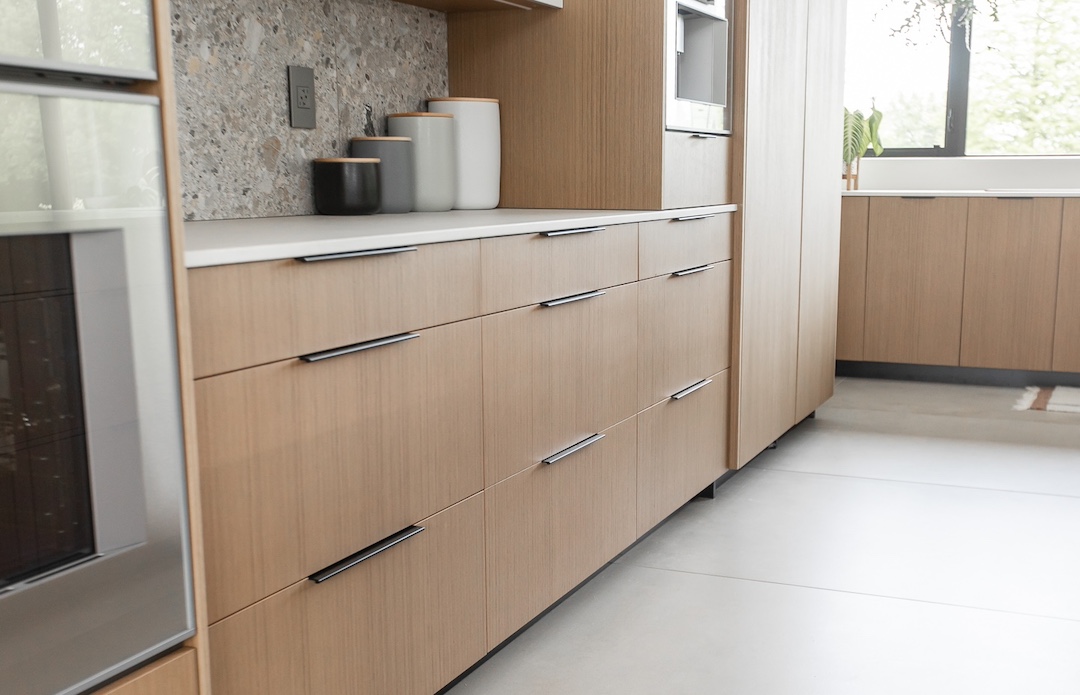
Wood veneer introduces warmth, movement and texture in a way few materials can replicate. The grain direction can visually expand a wall or change how height is perceived, while the finish selection affects how the surface reflects and absorbs light throughout the day.
We shape these outcomes long before fabrication begins.
Because veneer is thin and directional, it reacts to substrate stability, environmental conditions and installation sequencing. We make early decisions with both design intent and construction realities in mind to build a strong veneer package.
For that reason, we treat veneer as a primary architectural element instead of a final surface decision.
Design Alignment
Our process begins with a focused working session with designers, clients, fellow subcontractors and the contractor team. We use this meeting to establish clarity before material decisions or detailing move too far forward.
We review the drawings and define the intent behind the veneer scope. Where should it command attention? Where should it support the surrounding materials? How should the grain move across walls, ceilings or integrated millwork features?
This stage typically focuses on:
- Veneer’s role within the space and overall design intent
- Species, cut, tone and finish direction
- Grain movement, sight lines and proportion
- Panel sizing, joint layout and reveal strategy
- Interfaces with adjacent materials
- Substrate requirements, tolerances and installation sequencing
This early coordination reduces revisions later and supports a cleaner path through fabrication.
Material Strategy
Once we clarify the design direction, we treat veneer selection as a technical decision as much as an aesthetic one.
The veneer species sets the baseline, but the cut, figure and flitch ultimately determine how the installation reads at scale. A large feature wall calls for a different level of control than framed panels within cabinetry. The tone and intensity of the grain become more noticeable as the surface area increases.
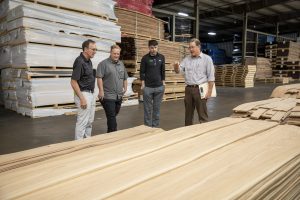
We evaluate veneer based on how effectively we can sequence it across the project. On larger installations, we pay close attention to flitch consistency so the finished work maintains visual continuity. Since natural variation is part of the wood, we plan for it early rather than trying to correct it once fabrication is underway.
With the layout strategy already defined, we then make ordering decisions accordingly. We also plan grain flow across panels before fabrication begins. This approach supports continuity and reduces the amount of adjustments we need to make later in the schedule.
Mockups
Renderings communicate intent. Mockups provide resolution.
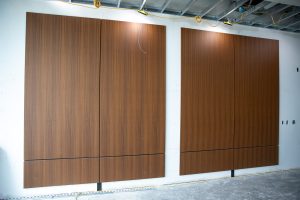
We create physical mockups that represent the scale, sequencing and finish selection in a way that closely very reflects the final installation. Under project lighting conditions, tone and reflectivity can be studied more accurately. This is especially useful since the grain’s movement is more visible across a larger surface area.
Mockups also clarify the technical details. Panel breaks, reveals and edge conditions can be reviewed in its real form, while material transitions become easier to assess. If we need to make refinements, they are addressed before fabrication continues.
This stage establishes a shared benchmark. Once approved, the mockup becomes the reference standard for production.
Approval and Refinement
After we review the mockups, we meet again to finalize the selection. We evaluate feedback carefully, then adjust the veneer selection or finish as needed and document the final direction. We move into fabrication only after approval is secured.
This structured review process protects both the quality and schedule of the project. Veneer sequencing requires commitment, so once we lay out and press panels, changing direction becomes more complex. By confirming decisions before production, we protect the integrity of the work.
We then use the approved mockup to measure fabrication.
Fabrication
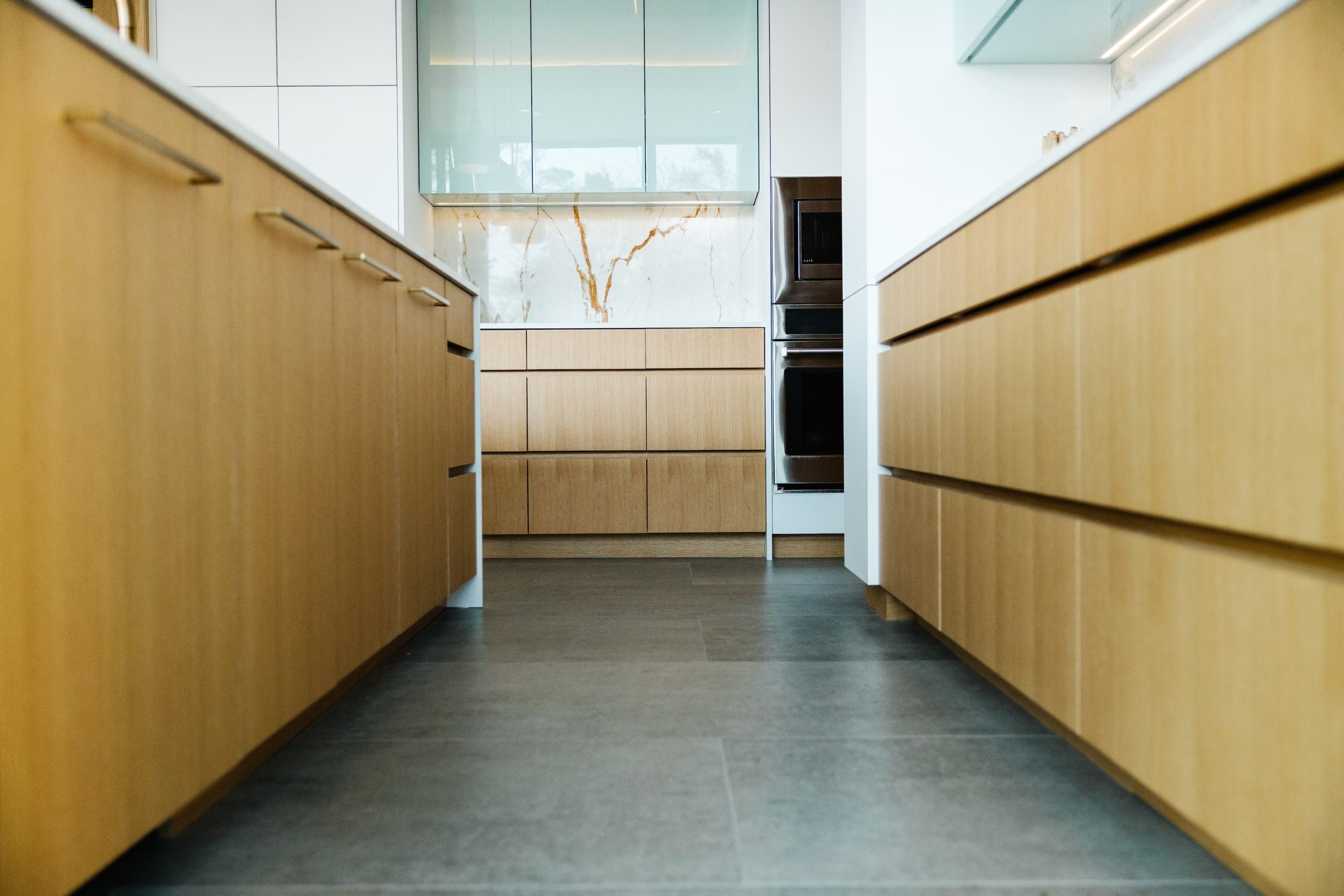 Once we confirm approvals, we begin fabrication under controlled conditions.
We sequence the veneer panels according to the approved layout, execute book matching or slip matching based on the design intent and maintain the grain flow so the installation reads as continuous.
Throughout production, we check the work against the approved mockup, focusing on:
- Grain alignment and sequencing
- Surface and finish consistency
- Seam placement and joint precision
- Panel construction based on installation order
Because we keep fabrication within our control, the same team involved in early coordination oversees execution. That consistency strengthens the quality and reduces interpretation gaps between design and production.
High-end veneer millwork requires technical accuracy and judgment. Our fabrication process is built around those expectations.
Installation
We install the veneer within an active construction environment. Wall tolerances, site conditions and the sequencing of other trades can affect the alignment and overall presentation.
We work closely with the contractor team to confirm the space is ready before panels are delivered. Our team then schedules and organizes deliveries to match the layout plan, and we review installation sequencing in advance to maintain proper grain flow across elevations.
If field conditions require adjustments, we address them promptly and evaluate changes against the approved layout to ensure the final installation reflects the design decisions made earlier in the process.
National Reach, Consistent Standards
Gator Millworks supports projects across the country. Because national work requires an added level of coordination, we manage shipping logistics, work alongside regional contractor teams and adapt to varying site conditions.
We rely on established internal standards to maintain consistency from project to project. Our entire team follows the same framework for material evaluation, mockup development, fabrication oversight and installation coordination, regardless of location.
Geography does not alter how we work. We simply apply the same disciplined process so the finished veneer reads as cohesive architecture once installed.
The Gator Veneer Standard
Gator Millworks approaches custom veneer millwork with intention and rigor. Our process centers on disciplined execution at every stage:
- Engage early to clarify architectural goals
- Select materials with continuity and scale in mind
- Use mockups to establish clear production benchmarks
- Fabricate under controlled oversight
- Coordinate installation to protect alignment, sequencing and grain flow
Full integration. Process control. National capability.
These principles guide how we deliver custom veneer across project types and locations. The result is veneer that reads as cohesive architecture, supported by disciplined execution from start to finish.