

Quality & Pitfalls in Custom Veneer Millwork
Custom veneer millwork has the power to define a space. When executed properly, it delivers depth and refinement that solid materials alone often cannot achieve. But veneer is also one of the most misunderstood materials in architectural millwork.
Too often, decisions are made late in the process or based solely on appearance and cost. This can lead to inconsistencies, disappointment and unnecessary rework.
At the highest level of millwork, quality is never accidental. It is the result of informed material selection and a clear understanding of how veneer behaves from forest to finished installation. Understanding grading standards, certifications and the common pitfalls is important to protecting both the design intent and the integrity of the final product.
Understanding Veneer in Custom Millwork
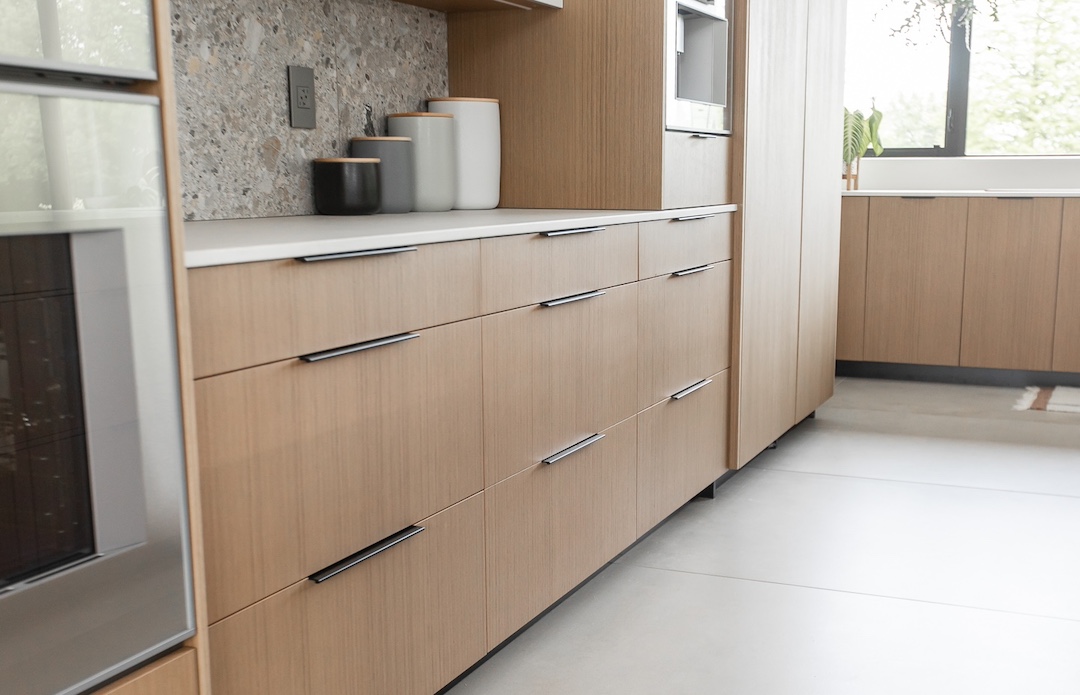
Veneer is a thin slice of natural wood applied to a stable substrate, allowing designers to achieve premium aesthetics while maintaining dimensional stability. It is widely used in high-end residential and commercial millwork for cabinetry, wall paneling, doors and architectural features.
Because veneer is a natural material, no two sheets are identical. Grain variation, color shift and figure are part of its character. When you anticipate and manage these characteristics, veneer elevates a project. When people ignore them, they can undermine even the most carefully designed space.
Veneer Grading
Veneer grading is one of the most critical and most misunderstood aspects of custom millwork. Industry standards, including those established by the Architectural Woodwork Institute (AWI), provide guidelines for appearance, consistency and allowable characteristics. These standards help set expectations but they are only effective when properly understood and applied.
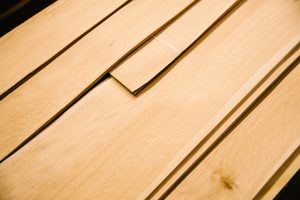
Higher grades generally offer more uniform color, tighter grain control and fewer natural markings. However, selecting the highest grade is not always the right choice. Some designs benefit from movement and variation, while others demand absolute consistency. The key is understanding how grading impacts appearance across an entire project, not just on a single panel.
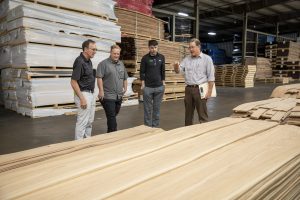
Equally important is flitch selection. A flitch is a sequence of veneer sheets cut from the same log, and it determines how grain and color flow from panel to panel. Poor flitch planning can quickly undermine even the highest-grade veneer.
Matching and Sequencing
Veneer matching and sequencing play a defining role in the final appearance of millwork. Book matching, slip matching and other techniques each create a different visual rhythm. When applied with purpose, they reinforce architectural lines and spatial flow. When overlooked, they introduce visual noise and inconsistency.
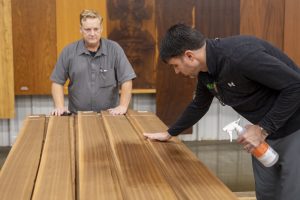
Large-scale veneer projects require disciplined planning, detailed shop drawings and mock-ups when appropriate. This process ensures alignment between design intent and execution. It also allows clients and design teams to approve natural variation early, rather than reacting to it after installation.
Craftsmanship Beyond the Veneer
Veneer quality alone does not determine the success of a millwork project. Even the most carefully selected material relies on the craftsmanship behind it. Substrate choice, pressing methods, adhesive performance, and finishing techniques all play a critical role in how veneer performs and ages over time.
We must also account for environmental conditions at every stage. Veneer is a natural material that responds to changes in temperature and humidity, making controlled fabrication and thoughtful installation essential. There is no margin for guesswork as precision is not an added value, but the baseline.
True quality reveals itself in the details that people often overlook but immediately feel. Panels align with intention, grain transitions feel effortless across surfaces and finishes protect and enhance the character of the wood rather than concealing it. When artisans execute craftsmanship properly, they create seamless and evident refined veneer.
Choosing the Right Millwork Partner
Successful veneer projects depend on early collaboration and technical expertise. The right millwork partner understands veneer as both a material and a craft. They ask the right questions early, guide material selection and communicate clearly throughout the process.
Experience matters because veneer leaves little room for correction once fabrication begins. Working with a team that values planning, transparency and precision protects the investment and honors the design.
Crafting exquisite custom veneer millwork involves making informed choices and executing them with discipline and care. When grading and craftsmanship align, veneer becomes a defining element of any space.
Contact Gator Millworks for help on your next big project.